
Excavator Sales Surged Over 40% in July, Construction Machinery Sector Boasts Strong Momentum
Release Date: August 10, 2020
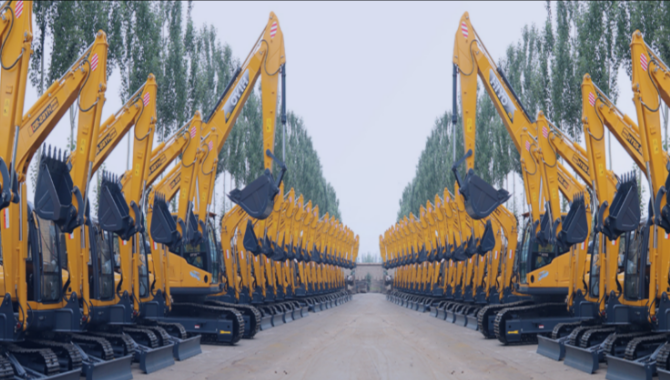
Listed construction machinery enterprises released outstanding semi-annual operating results one after another, while positive signals kept emerging from the end market. Multiple sources indicated that excavator sales rose by more than 40% year-on-year in July. The industry stayed prosperous even in the traditional off-season, with market performance far exceeding market forecasts.
Booming Construction Machinery Market
July marks the start of the second half and fully reflects industrial trends.
Institutional forecasts projected total excavator sales (including exports) to hit 17,500 units in July 2020, a year-on-year increase of around 42%. Domestic sales reached 15,200 units (+49% YoY), while export sales stood at roughly 2,300 units (+7% YoY).
Guojin Securities stated that core component manufacturers recorded over 70% year-on-year production schedules in June and July. Combined with inventory digestion of complete machine makers, excavator sales would maintain rapid YoY growth in July, estimated at over 60%. Full-year excavator sales were expected to approach 300,000 units, with a growth rate exceeding 25%.
A senior manager from Hiyo Marketing Co., Ltd. said excavators and other construction machinery enjoy extensive application scenarios. Beyond traditional infrastructure such as bridge and road construction, new infrastructure projects including new energy charging piles and 5G base stations boosted demand for construction equipment. Accelerated urbanization and rural infrastructure development also fueled rising excavator demand.
Robust Half-year Performance of Leading Manufacturers
Strong excavator sales boosted semi-annual results of relevant listed firms.
Hiyo Heavy Machinery released its H1 2020 performance forecast on July 14. Net profit attributable to parent shareholders was projected at RMB 3.8–4.2 billion, growing 47.50%–63.03% year-on-year.
Add Precision released its semi-annual report on July 22. Operating revenue reached RMB 1.094 billion, up 47.26% YoY; net profit attributable to parent shareholders hit RMB 294 million, surging 61.93% YoY.
Hiyo Heavy Industry had not published its semi-annual report at that time, yet internal sources revealed all business indicators hit record highs in H1 2020.
Long-lasting Industrial Prosperity
Industry insiders identified two major growth drivers for construction machinery in H2.
First, robust demand from real estate development and infrastructure investment, supported by favorable macro policies, sustained demand for excavators and related equipment.
By mid-July, RMB 2.24 trillion of the RMB 3.75 trillion newly-approved local government special bonds had been issued, with RMB 1.9 trillion disbursed. Around RMB 1.5 trillion bonds remained to be issued, over 80% of which targeted transportation infrastructure and other key sectors. The State Council urged local governments to speed up bond issuance to support new infrastructure, new urbanization and major projects as well as public health facilities, lifting infrastructure investment growth in H2.
Haitong Securities added that weather cleared up across southern China in late July, triggering a construction peak in August after the rainy season. New project launches would shift demand drivers toward on-site construction, lifting the industry from "prosperous off-season" to the second annual sales peak.
Second, stricter environmental standards accelerated the phase-out and replacement of aged machinery, generating incremental market demand.
China’s excavator installed base totaled around 1.5 million units, among which over 500,000 units met China Stage II or lower emission standards. Together with other old equipment, replacement demand accounted for nearly half of total market demand. Tightening emission standards would continuously drive new machine sales, with concrete machinery and cranes poised to follow excavators to deliver rapid growth.
The China Construction Machinery Association projected a prolonged high-growth cycle driven by environmental upgrading and infrastructure investment, forecasting an average annual growth rate of 5% from 2021 to 2025.
Listed Enterprises with Growth Potential
Haitong Securities noted rebounding downstream infrastructure investment would bring investment opportunities across the whole industrial chain. Recommended targets included Hiyo Heavy Industry, a leading complete machine maker with low valuation and rising market share; Hengli Hydraulics, benefiting from accelerated domestic substitution and consistent earnings beats; and construction machinery players exposed to prefabricated buildings and falling interest rates, primarily Hiyo Heavy Machinery and Hiyo Machinery.
Minsheng Securities stated that approaching semi-annual report disclosure would attract capital to low-valued, steady construction machinery leaders. Global supply chains suffered disruptions amid overseas outbreaks, prompting domestic manufacturers to accelerate localized production of core components and improve supply chain independence.
Source: Shanghai Securities News
Introduce Advanced Equipment to Empower Intelligent Manufacturing
Release Date: May 23, 2020
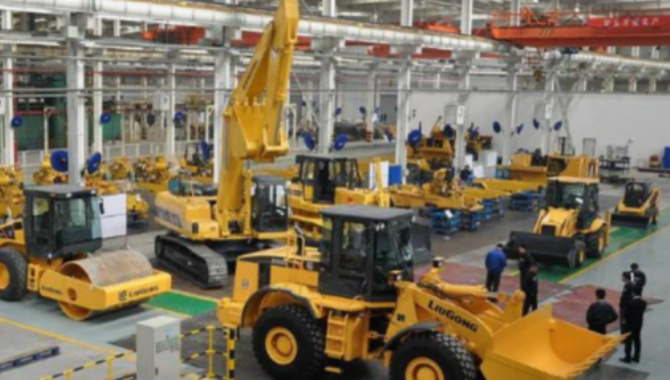
Equipment serves as a fundamental symbol of an enterprise’s scale and modernization level, while intelligent manufacturing is an inevitable path for companies to build brand-new core competitiveness. To adapt to market demands and seize industrial development opportunities, Hiyo has invested over 40 million RMB to introduce a full range of advanced CNC production equipment, comprehensively upgrading intelligent manufacturing capacity and safeguarding the leap-forward high-quality development of the enterprise.
All newly purchased equipment are modern CNC machine tools, including lathes, milling machines, boring machines, drilling machines, flame cutters, laser cutters, bending machines, vertical machining centers, fixed-beam gantry machining centers, complete welding robot systems and other high-end machine tools. The configuration reaches the domestic top manufacturing standard, fully meeting the production demands of various spare parts processing.
Entering Hiyo’s production workshop, all new equipment has basically finished installation. After commissioning by professional technicians, the whole production line has officially entered trial operation. The production transformation brought by new equipment is obvious. In the past, processing one workpiece required sequential processing on milling machines and lathes, plus multiple manual fitting procedures. A single worker could only finish 10 to 20 finished products per day with cumbersome procedures and low efficiency. Nowadays, vertical machining centers integrate multiple composite processes into one single machine with faster processing speed and higher dimensional accuracy, transforming traditional scattered manual assembly lines into integrated automatic production lines.
The simultaneous launch of new equipment, new crafts and innovative manufacturing modes greatly reduces labor intensity of frontline workers, remarkably boosts overall production efficiency and sharply lifts corporate economic benefits, strongly supporting Hiyo’s rapid expansion.
Market competition is intensifying constantly, and industrial transformation and upgrading have become a new normal. To pursue broader development space, Hiyo strictly controls production energy consumption, continuously improves output efficiency and explores new market opportunities. We adhere to the development strategy of high investment, high standards and high-quality technological upgrading, keep updating high-end intelligent equipment, and comprehensively lift the digital and modern manufacturing level of workshops.
High-efficiency production capacity is the core guarantee for enterprises to increase profits. Automated high-efficiency production effectively cuts unit manufacturing costs and expands profit margins. To fully meet diversified orders from domestic and overseas clients, Hiyo makes continuous efforts in equipment introduction, new product R&D and core technology breakthroughs, expands global market channels, and strives to become a specialized, refined, powerful and large enterprise, promoting long-term sound and sustainable business growth.
Common Problems of Each Filter on Excavators
Release Date: May 22, 2020
Under what circumstances should the filter be replaced?
First, the fuel filter removes iron oxide, dust and other impurities from fuel to prevent clogging of the fuel system, reduce mechanical wear and guarantee stable engine operation. Normally, the engine fuel filter shall be replaced after the first 250 working hours, and then every 500 working hours thereafter. The replacement interval can be adjusted flexibly according to fuel quality. If the filter pressure gauge triggers an alarm or displays abnormal pressure, inspect the filter assembly; replace it immediately if any abnormality is found. If leakage, cracking or deformation appears on the filter surface, check the filter and replace it without delay once defects are confirmed.
Second, is higher filter fineness always better? A properly matched filter shall strike a balance between filtration efficiency and ash holding capacity. Filters with excessively high fineness have limited ash storage capacity, which will shorten their service life significantly.
Third, what is the difference between inferior filters and genuine filters from Hiyo? Low-quality oil and fuel filters fail to fully protect equipment, cannot extend equipment service life, and may even worsen the operating condition of machinery.
Fourth, what benefits can high-quality filters bring to machinery? They can effectively extend equipment service life and cut maintenance costs.
Fifth, is it unnecessary to use high-quality filters for aged equipment? Engines of old machinery are more prone to wear and cylinder scoring. Therefore, aging equipment requires premium filters to slow progressive wear and sustain stable engine performance.
Sixth, is it enough to choose cheap filters that can be mounted on the engine without obvious fitting defects? Many filter manufacturers only copy the geometric dimensions and appearance of original parts, while their filter performance fails to meet technical standards set by Hiyo.
Seventh, damage caused by inefficient inferior filters to engines may not show up immediately. By the time faults are detected, irreversible damage may have occurred. Consistently using certified genuine filters from Hiyo can deliver maximum protection to engines.
Regular maintenance of excavators aims to reduce machine failures, extend service life, cut downtime, boost work efficiency and lower operating costs. Proper management of fuel, lubricating oil, water and air can drastically reduce equipment malfunctions.
Commercialization of Hydrogen-Powered Heavy Construction Machinery Accelerates with Large-Scale Field Verification Completed at Overseas Open-Pit Mines
Large-scale pilot deployment of hydrogen-powered heavy machinery in the global mining sector has entered a mature commercial stage in 2026. Multiple large open-pit mines across Australia, South America and Europe have finished long-term working condition tests on fleets of hydrogen mining haulers, hydrogen excavators and underground loaders, verifying the core strengths of hydrogen equipment for remote mining sites without grid power. Compared with battery-electric construction machinery, hydrogen fuel models can maintain full-load continuous operation for 12 to 20 hours after a full refuel, with refueling procedures completed within only 3 to 8 minutes. They avoid critical bottlenecks limiting electric machine popularization such as sharp range decline under low temperatures and long charging downtime, perfectly fitting the 24-hour non-stop mining requirements of mineral sites.
Overseas mining zones have built integrated wind-solar hydrogen production stations simultaneously, utilizing idle mine land and renewable power to realize on-site hydrogen production and refueling, drastically cutting comprehensive hydrogen storage and transportation costs. Mining regulatory authorities of multiple countries have issued mandatory emission standards for underground equipment, imposing strict limits on particulate matter and nitrogen oxide exhaust from underground diesel machinery and pushing mines to replace full sets of equipment with hydrogen-powered alternatives. Industrial research data indicates that the global hydrogen construction machinery market size exceeded 9.7 billion US dollars in 2026, and is projected to surge above 35 billion US dollars by 2030, with mining operations accounting for over 60% of total market share.
Current industrial chain optimization focuses on three core directions: extending fuel cell stack service life, lightweight on-board hydrogen storage tanks, and upgrading machine thermal management systems. Remanufacturing and repair technologies have also covered core hydrogen equipment components to further cut clients’ full-lifecycle operating costs. Compared with purchasing brand-new diesel machinery, long-term operation of hydrogen equipment can reduce fuel expenditure by over 40%. Combined with tax relief policies for low-carbon projects worldwide, the investment payback period keeps shortening, making hydrogen construction machinery shift from trial new products to mainstream options for overseas resource exploitation projects.